
Injury Prevention Tips for Knee Pain (ACL), Shoulder Pain (PINCHED NERVE), and Lower Back Nerve Pain (SCIATICA)
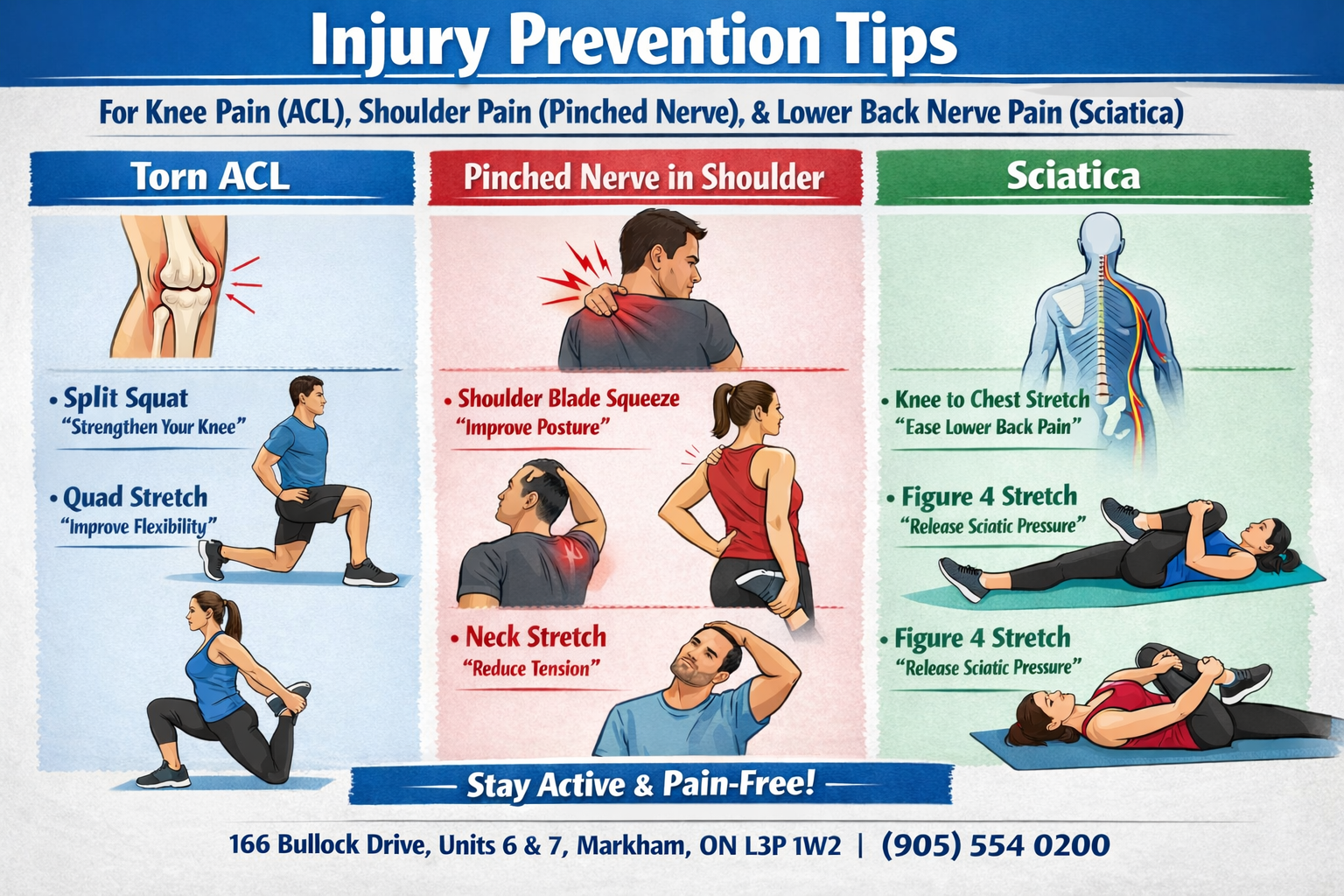
- Torn ACL
- An ACL tear is a common knee injury, where the anterior cruciate ligament in the knee is stretched, partially torn, or completely ruptured, usually due to sudden stops, jumping, or direct impact. Many people hear a pop or feel a popping sensation in the knee when an ACL injury occurs.
- An exercise to help prevent an ACL tear is a split squat. Split squats strengthen your glutes and hamstrings, which help keep your knee from collapsing inward and reduce your risk of injury.
- A stretch to help prevent an ACL tear is a quad stretch. Stretching your quads helps improve flexibility in your thighs and supports proper knee movement, which can lower your risk of injury.
- Pinched shoulder nerve
- A pinched nerve in the shoulder happens when nearby bones, cartilage, or muscles press on a nerve. This can cause sharp pain, numbness, tingling, and weakness that may travel from the neck or shoulder down the arm. It can happen because of poor posture, tight neck or shoulder muscles, or a disc or bone putting pressure on the nerve.
- An exercise to help prevent a pinched nerve in the shoulder is the shoulder blade squeeze. Shoulder blade squeezes strengthen the upper back muscles, which improve posture and help reduce pressure on the nerves.
- A stretch to help prevent a pinched nerve in the shoulder is a neck stretch. Neck stretches help improve flexibility in your neck muscles and reduce pressure on the nerves, which can lower your risk of injury.
- Sciatica
- Sciatica is pain, numbness, or weakness originating from irritation of the sciatic nerve in the lower back, often radiating down one buttock and leg. Sciatica is usually caused by a herniated disc or spinal stenosis, symptoms often worsen with sitting, coughing, or sneezing.
- An exercise that can help relieve sciatica is the knee to chest stretch. Knee to chest stretches gently stretch the lower back and glutes, which can reduce pressure on the sciatic nerve and help decrease pain and tightness.
- A stretch to help relieve sciatica is the figure 4 stretch. Stretching your glutes and piriformis helps reduce tension around the sciatic nerve and can decrease pain and tightness in the lower back and hips.
If you’ve been dealing with knee pain, shoulder discomfort, or lower‑back nerve pain and you’re looking for simple ways to feel better, here are some tips that might help you understand what’s going on and how to manage it.
As a personal trainer at The Markham Gym, I work with many clients who want to stay active without preventable injuries, and three of the most common issues I see are ACL injuries, often referred to as knee tears, pinched nerves in the shoulder, and sciatica, which many people describe as lower back nerve pain.
A torn ACL happens when the anterior cruciate ligament in the knee gets stretched or torn from sudden stops, jumping, or quick changes in direction, and many people even hear a pop when it happens. To help prevent this, I teach clients the split squat because it strengthens the glutes and hamstrings and keeps the knee from collapsing inward, and a helpful tip is to keep your front knee pointing straight ahead throughout the movement. I also include a quad stretch in warm-ups since improving thigh flexibility supports smoother knee mechanics and reduces strain during activity.
Pinched nerves in the shoulder are another issue I see often, usually caused by poor posture or tight neck and shoulder muscles pressing on a nerve. This can lead to sharp pain, tingling, or numbness down the arm, so I use shoulder blade squeezes to strengthen the upper back, and one tip I give clients is to imagine pulling their shoulder blades gently toward their back pockets. I pair that with simple neck stretches to reduce tension and lower the risk of nerve compression.
Sciatica is another common problem, where irritation of the sciatic nerve causes pain that travels from the lower back down the leg. It is often linked to herniated discs or tight muscles in the hips and lower back, so I use the knee to chest stretch to help clients release pressure in the area, and I remind them to keep their lower back relaxed on the floor for the best results. I also include the figure four stretch because it targets the glutes and piriformis and helps reduce tension around the sciatic nerve, so clients can move more comfortably.
If you ever want guidance on proper form, injury prevention, or building a program that keeps you moving safely and confidently, you’re always welcome to stop by The Markham Gym.
You can find us at 166 Bullock Drive, Units 6 & 7, Markham, ON L3P 1W2, and if you’d like to reach out directly, our phone number is (905) 554‑0200.
We’re here to help you train smarter and feel your best
If you need help with coaching and personal training, feel free to contact The Markham Gym Trainers & team of therapists.
The Markham Gym
166 Bullock Drive
Units 6 & 7
Markham, ON
L3P 1W2